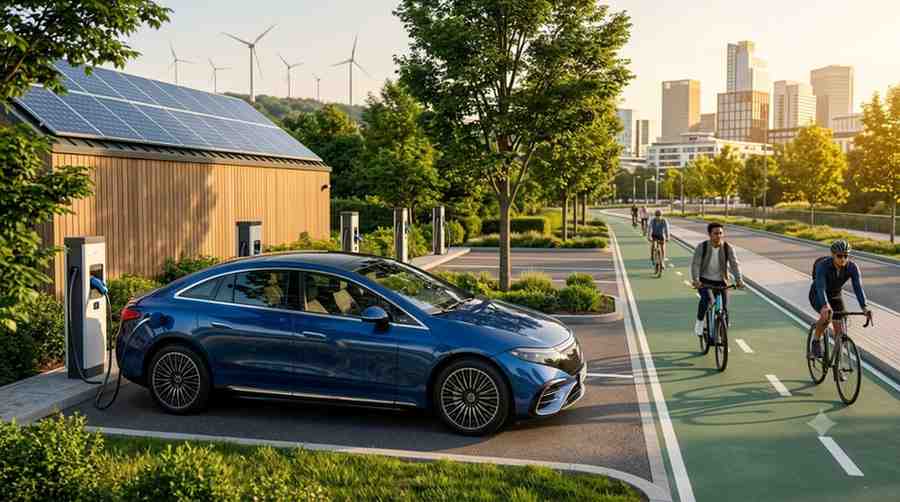
The transportation sector is one of the largest contributors to global greenhouse gas emissions, making the shift to sustainable mobility more important than ever. Electric vehicles (EVs) have emerged as a transformative solution, offering a cleaner and more efficient alternative to traditional gasoline and diesel-powered vehicles.
As governments, businesses, and consumers increasingly embrace electric mobility, EVs are playing a vital role in reducing emissions, improving air quality, and building a more sustainable future.
What Are Electric Vehicles?
Electric vehicles (EVs) are automobiles powered by electric motors instead of internal combustion engines. They use rechargeable batteries to store energy and produce zero tailpipe emissions during operation.
There are several types of electric vehicles:
- Battery Electric Vehicles (BEVs): Fully electric vehicles powered entirely by rechargeable batteries.
- Plug-in Hybrid Electric Vehicles (PHEVs): Vehicles that combine an electric motor with a gasoline engine.
- Hybrid Electric Vehicles (HEVs): Vehicles that use both an internal combustion engine and an electric motor without external charging.
Electric vehicles are driving the transition toward cleaner transportation and a more sustainable future.
— The Future of Green Mobility
Among these options, Battery Electric Vehicles (BEVs) are considered the most environmentally friendly because they rely entirely on electricity for propulsion.
Benefits of Electric Vehicles
1. Reduced Environmental Impact
One of the greatest advantages of electric vehicles is their ability to reduce greenhouse gas emissions and air pollution. Since EVs produce no tailpipe emissions, they contribute to cleaner cities and healthier communities.
When charged using renewable energy sources such as solar or wind power, their environmental benefits become even greater.
2. Lower Operating Costs
Electric vehicles have fewer moving parts than conventional vehicles, resulting in lower maintenance costs. Owners also spend less on fuel because electricity is generally less expensive than gasoline or diesel.
- Reduced maintenance requirements
- Lower fuel expenses
- Fewer engine-related repairs
- Long-term cost savings
3. Superior Energy Efficiency
Electric motors waste less energy than internal combustion engines, allowing more of the stored electricity to power the vehicle. This increased efficiency reduces overall energy consumption and dependence on fossil fuels.
4. Quiet and Comfortable Driving Experience
EVs provide smooth acceleration, minimal vibration, and almost silent operation. Instant torque also delivers responsive performance, creating a comfortable and enjoyable driving experience.
The Role of EVs in Sustainable Transportation
Sustainable transportation focuses on reducing environmental impact while providing safe, affordable, and efficient mobility.
Electric vehicles contribute by:
- Reducing carbon emissions
- Improving urban air quality
- Decreasing dependence on fossil fuels
- Supporting renewable energy integration
- Encouraging smart transportation systems
- Promoting sustainable urban development
When combined with renewable electricity, public transportation, and smart city infrastructure, EVs become a cornerstone of modern sustainable mobility.
Challenges Facing Electric Vehicle Adoption
Despite their many advantages, electric vehicles still face several challenges that must be addressed.
-
Limited Charging Infrastructure
Many regions need more public charging stations to support growing EV adoption.
-
Battery Costs
Although battery prices continue to decline, they remain one of the most expensive components of an electric vehicle.
-
Charging Time
Charging an EV typically takes longer than refueling a gasoline-powered vehicle, though fast-charging technology continues to improve.
-
Range Anxiety
Some drivers remain concerned about battery range on long journeys, although modern EVs now offer significantly greater driving distances.
Government Support and Industry Growth
Governments worldwide are encouraging EV adoption through various incentives and policy initiatives.
- Tax credits and rebates
- Purchase subsidies
- Reduced vehicle registration fees
- Expansion of public charging infrastructure
- Investment in renewable energy
- Future phase-out of gasoline and diesel vehicle sales in many countries
Automobile manufacturers are also investing billions of dollars in research and development to produce more affordable, efficient, and longer-range electric vehicles.
The Future of Electric Mobility
The future of transportation is becoming increasingly electric. Emerging technologies are expected to make EVs even more efficient and accessible.
- Solid-state batteries
- Ultra-fast charging systems
- Longer driving ranges
- Improved battery safety
- Vehicle-to-grid (V2G) technology
- Autonomous electric vehicles
These innovations will continue accelerating the global transition toward sustainable transportation.
Frequently Asked Questions
What is an electric vehicle (EV)?
An electric vehicle is a car powered by an electric motor using rechargeable batteries instead of a traditional gasoline or diesel engine.
Are electric vehicles environmentally friendly?
Yes. EVs produce zero tailpipe emissions and help reduce greenhouse gas emissions, especially when powered by renewable energy.
Are electric vehicles cheaper to maintain?
Generally, yes. EVs have fewer moving parts, require less maintenance, and usually have lower fuel costs than conventional vehicles.
What are the biggest challenges for EV adoption?
Common challenges include charging infrastructure, battery costs, charging time, and concerns about driving range.
Conclusion
Electric vehicles represent far more than a technological innovation—they symbolize an important step toward cleaner, healthier, and more sustainable transportation. By reducing emissions, improving energy efficiency, and supporting renewable energy integration, EVs are transforming the way people travel.
Although challenges such as charging infrastructure and battery costs remain, continuous advances in technology, supportive government policies, and growing consumer adoption are accelerating the shift to electric mobility.
As the world moves toward a greener future, embracing electric vehicles can help reduce environmental impacts, conserve natural resources, and create a cleaner, more sustainable planet for generations to come.